License and permit display at the station and at the door
Every state board inspector starts with the basics: checking for visible licenses and permits. The requirement is not just about having the documents, but about where and how you display them. Your personal or shop license must be posted in plain view. In most states, that means at eye level near the entrance, and also at each station where services are provided. Inspectors look for your name, expiration date, and that the license is current.
Temporary licenses, if allowed, need their own place. If you are renting a chair or station, your individual license goes right at your workspace, not just at the main entrance. A shop permit or establishment license must be visible from the main door. Laminated copies are sometimes allowed, but the original is always preferred. Some states require a photograph matching the license at the station.
Fines for missing or expired licenses can be immediate. Do a walk-through today: entrance, reception, each chair. Check that all required documents are up, legible, and easy for a client, or an inspector, to spot before you begin work.
Keep reading: Break Even Math for a Rented Chair: Rent, Backbar and Fees
Disinfectant: registration, dilution, contact time and how often it is changed
Registration and Labeling
Inspectors look for disinfectants with an EPA registration number on the label. This is proof that the product meets state standards. Homemade solutions or generic cleaners do not count. The bottle or container must show the product name and registration. If you pour into a secondary container, you must label it with the brand and active ingredient.
Dilution and Mixing
The mixing instructions on the label are not a suggestion. Inspectors may ask how you mix your disinfectant, and want to see measuring tools on hand. Guesswork is not enough. Some states require test strips for certain solutions, to check the strength. Always mix fresh solution for the day, unless the product specifically states a longer shelf life after dilution.
Contact Time and Changing Solution
Contact time is the number of minutes a tool must stay wet with disinfectant to be effective. Most products require ten minutes, but check your label. Cutting corners here is an easy citation. Inspectors may watch you disinfect to see if you follow the full time. Change the solution as often as the label requires, which is usually daily or whenever it gets cloudy. Keep a log if your state requires it, noting the date and time each batch is mixed and changed.
A neglected disinfectant jar or spray bottle is an instant red flag. Review your routine. Make sure every employee and renter can answer questions about which product is used, how it is mixed, and how long tools must soak.
Clean and used tools stored separately and clearly labeled
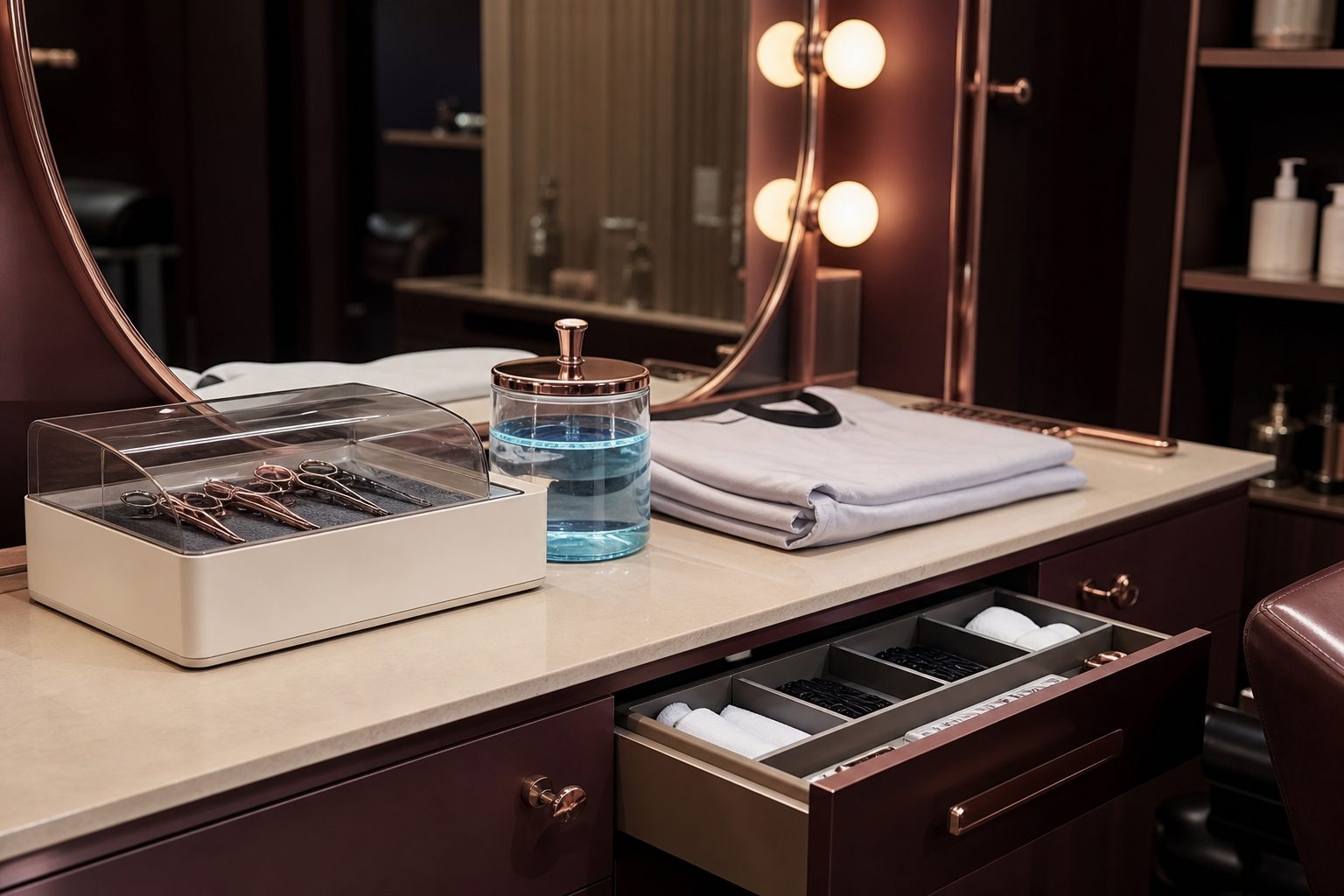
The board is strict about clean and dirty tool storage. You must have two separate, clearly labeled containers: one for sanitized tools, and one for used or soiled items. These cannot be next to each other without clear separation. A drawer, tray, or covered box works, but it must be marked and only used for that purpose.
Inspectors often open drawers, check under stations, and look in cabinets. Any tool found in the wrong container is a problem, especially if it is a porous item like a nail file or buffer, which cannot be sanitized and should be disposed of after use.
If you use UV boxes or sealed containers, these still need to be labeled and maintained. Do not store personal items or food in the same area. Never mix combs or brushes that have been used, even if you plan to clean them later. The system should be obvious to anyone walking in off the street.
Keep reading: A Saturday of Double Booked Color, Hour by Hour
Shears, clippers, combs and brushes between every single client
Cleaning and Disinfecting Routine
Most states require that every tool, shears, clippers, combs, brushes, be cleaned and disinfected after each client. This means brushing off hair and debris first, then washing with soap and water, then soaking or spraying with an EPA-registered disinfectant for the full label time.
Inspectors look for evidence this is happening. Wet tools, current disinfectant solution, and a logical workflow are all clues. Some will ask to see the process or test your knowledge. Clippers can be tricky: detachable blades must be removed and cleaned, not just wiped down.
Between Client Changes
You must not reuse any tool on a new client without proper cleaning. Some states require a disposable cover or disinfectant spray for items that cannot be soaked, such as certain clipper attachments. Regular brush cleaning and storage are not optional.
A common citation comes when a stylist is busy and forgets to switch out or disinfect between clients. Build extra time between appointments if needed. If you use shared tools, be sure all staff follow the same protocol.
Capes, linens and how laundry has to be handled and stored
Single Use and Reuse
Every client deserves a clean cape and fresh linens. Single-use items must be thrown away after each service. Reusable capes and towels need proper laundering between uses. Do not reuse a towel or neck strip, even if it looks clean.
Laundry Handling and Storage
Soiled linens go in a closed, labeled container, never on the floor or a chair. Inspectors will check for a laundry hamper or sealed bag within reach of each station. Clean linens must be stored in a closed cabinet or on a covered shelf, away from dust, hair, and chemicals.
Onsite laundry must use hot water and detergent. If you send laundry out, you are still responsible for ensuring it is processed correctly. Do not keep laundered and soiled linens together. The flow should be one-way only: clean in one area, used in another, and never crossing paths.
Improper laundry handling is a frequent violation. The inspector may ask how often laundry is done, what temperature is used, and where clean items are stored. Walk through your routine and check for weak spots.
See how ShearHold handles this for beauty and salons
Blood exposure procedure and the first aid supplies required on site
Written Procedure
Every salon and independent station must have a written blood exposure procedure. This should be posted or available at every chair. Inspectors may ask to see it or quiz staff about the steps: stop the service, put on gloves, clean the wound, use antiseptic, bandage, and dispose of contaminated materials in a labeled bag.
First Aid Supplies
You need a basic first aid kit at the station or within easy reach. At minimum, it should have gloves, antiseptic wipes, bandages, and a sealable bag for contaminated waste. Some states require a sharps container if you do waxing or shaving. The kit must be stocked and not expired.
Inspectors check for compliance and may ask you to describe or demonstrate the process. All staff and renters must know what to do if a client or technician is cut, and how to clean up safely. Review the written procedure with new hires and renters, and keep the kit where it can be reached without delay.
Food, drink, pets and personal belongings at the station
Personal items are often overlooked, but inspectors notice. No food or drink is allowed at any workstation, even if it is just a water bottle. Eating in the service area is prohibited in almost every state. Inspectors will cite even a covered coffee cup.
Pets are not allowed in the salon, with the exception of service animals. This includes animals belonging to staff or clients. If you have a pet in a back room, it must not have access to the service floor. Inspectors may ask about animal policy, and will check for signs of hair, food bowls, or bedding.
Personal bags, coats, and other belongings should be kept in a designated area away from stations and clean supplies. A locker or closed cabinet is best. Clutter at the station can lead to sanitation issues and citations. The rule is clear separation: work tools here, personal items there.
Records and logs to have ready when the inspector walks in
Disinfection Logs
Some states require you to keep a daily log of when disinfectant is mixed and changed. This can be a notebook, printed sheet, or digital file. The log should include the date, time, and initials of the person responsible. Inspectors may ask to see these records and compare them to your actual solution.
Laundry and Cleaning Schedule
If your state requires a laundry or cleaning log, keep it up to date. This record shows when linens are washed, when floors and surfaces are cleaned, and who performed each task. Missing or incomplete logs are a common citation.
Incident Reports
Any blood exposure, injury, or unusual event should be logged with the date, service performed, and action taken. Some states require you to keep these records for a set period. Inspectors may ask for incident reports if they see evidence of a recent accident.
Client Records
For chemical services, some states want you to keep client cards with service and allergy information. This helps inspectors verify that you are following safe procedures and can track any adverse reactions. Keep these records secure but accessible.
Having up-to-date logs shows inspectors you run a professional operation and take sanitation seriously. Digital tools can help keep these records accurate and easy to access, especially for independent stylists and renters.
Many stylists rely on appointment books or digital systems to track bookings, deposits, and client notes. Using a management tool that captures booking deposits, no-show fees, and rebooking in one place can help streamline your records and prepare you for an inspection at any time.